BIO:
Shellyne Rodriguez is an artist, educator, writer, and community organizer based in the Bronx. Her practice utilizes text, drawing, collage and sculpture to depict spaces and subjects engaged in strategies of survival against erasure and subjugation.
Shellyne Rodríguez es una artista, educadora, escritora y activista comunitaria basada en el Bronx. En su obra utiliza el texto, el dibujo, el collage y la escultura para representar espacios y temas que se enfrentan a estrategias de supervivencia frente al olvido y la opresión.
STATEMENT: Español Abajo
Baroque, Quebrao: The Unconquered Artist from the Periphery Within Empire
My practice as an artist is situated within the contexts of history. A past which is not a past and continues to render the contours of the present. To speak about the what and the why of my practice requires placement and context. That placement is inside the empire of the United States on the margins of its financial capital, New York City. The Bronx, like many other enclaves inside the U.S. constitutes what Malcolm X, Stokely Carmichael, and Huey P Newton referred to as “Domestic”, “internal” and “dispersed” colonies.” These internal colonies on unceded indigenous land are populated by Black descendants of U.S. chattel slavery, peoples from the Caribbean, Latin America, Africa and Asia.
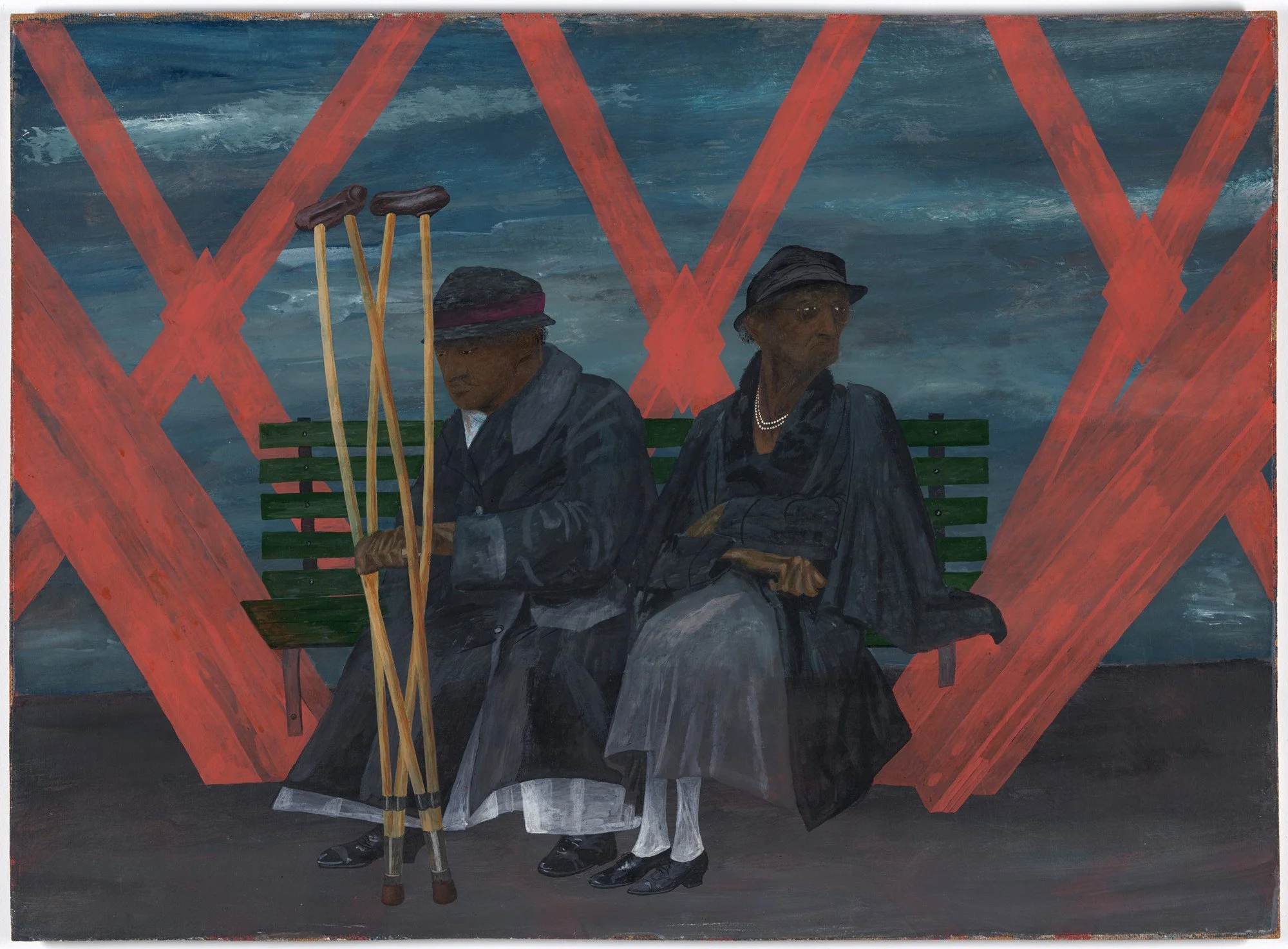
Willis Avenue Bridge, Ben Shahn (1940)
My historical subjectivity as a descendant of enslaved Africans by way of the Caribbean has placed me here. I am who I am and where I am as the result of many unfolding consequences or to put it in Marxist terms, because of the dialectical evolution of productive forces. Indigenous knowledges and African spiritual traditions rooted in ancestral worship would reiterate this point in saying, we are never only ourselves. We are the unfolding of many lives lived who have thrusted us forward to this very moment. We are the culmination of many grandparents and their grandparents and so on. The unfolding of an original seed which still blossoms and bear fruit. Art cannot be disconnected from the series of consequences which has led to now. This is true for the descendants of the Medicis or the Mayflower as much as it is for the descendants of the field negro in the antebellum south or the maroons in the Palenque foothills of Northern Colombia. How then does the artist whose life is shaped by imperial conquest, the emergence of capitalism, slavery, colonialism and genocide position their artist practice in relation to the Western canon they are in contentious relation to?
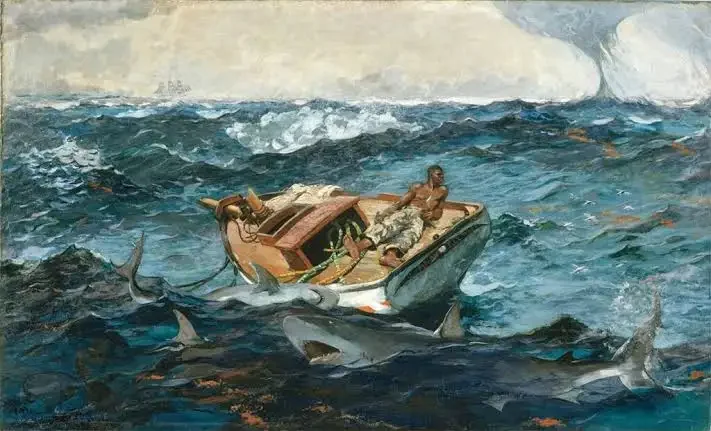
The Gulf Stream, Winslow Homer, (1899)
There is no doubt that for those of us in the so-called New World, the imposition of The West has shaped us. This is what we inherit from the atrocity of colonial and imperial domination that reordered our world converting us into gardens and quarries for a hoarding Europa. But while we are historically shaped by subjugation not all of us are conquered. The unconquered among us have always undermined, subverted, bootlegged, remixed and revolted against these impositions. We have been an underworld. A hidden guerrilla stronghold. An impending reckoning. In this way, my practice is a strategy of survival against erasure and subjugation. My practice recognizes its inherited unfreedom and refuses assimilation to empire. It acts as a haunting shadow over the Western canon. An orisha hidden within the catholic saint. Its a practice which understands that the power of art surpasses the aesthetic and is also located in how it holds what is to be remembered beyond the gilded frame.
As an unconquered artist formed in the crucible of colonial conquest in the New World, I see in the Western European canon of art the history of subjugation and resistance. To behold the illustrious moments of art history and place myself in its context is to find myself beneath the blade of a sword, chained on a boat, on a sugar plantation or deep in a silver mine. I see the Spanish settlement of Borikén (Puerto Rico) in Michelangelo’s completion of the Sistine chapel in the same year. To encounter La Gioconda by DaVinci is to know that her genius foreshadowed the atrocities committed by Hernan Cortes, whose pillaging of the lands we now call Mexico introduced Europe to the rare saturated red dye made from the cochineal insect collected from local cacti.

Treatise on the Cochineal" by José Antonio de Alzate y Ramírez in 1777 Amerigo Vespucci based on a charcoal drawing by Da Vinci
The Nahua people who were not killed by disease or slaughtered during the conquest were worked to death to produce the vibrant red pigment found in paintings such as Caravaggio’s “The incredulity of Saint Thomas” (1601) and Rembrandt’s “The Jewish Bride, (1665–69). DaVinci’ s many subjects included Amerigo Vespucci, whose mappings of the so-called New World would give cause to name Abya Yala and Turtle Island, America.

The Incredulity of Saint Thomas, Michelangelo Merisi da Caravaggio (1602)
My practice finds relation with the Western canon through those artists whose approach to making “opens up their way of looking at the world and their relationship to it in their time” as historian John Berger describes. This is an inquiry that requires more than looking at mastery of technique and form. Pieter Breughal the elder shows me Flemish village life at a time when the old European order was being replaced by a world economy brought on by the expansion and penetration into the new world. In his work I see life before the pauperization of European peasants driven from the land through enclosures and the creation of roving vagabonds rendered expendable that would be forced to sell their labor under the new capitalist order. I see the abandoned peasant wives accused of witchcraft whose property was systematically confiscated. Those who were not tortured and burned as witches who turned to sex work for survival at the ports of Amsterdam serving the sailors of the Dutch East & West India company; I see their indentured husbands, rural workers turned sailors for hire lost at sea or killed in the Caribbean by revolting Arawaks. I wonder how many of these men would be among those sailors who escaped their abusive shipmasters joining the seafaring class who mingled with slaves and maroons participating in the underground economy selling contraband and carrying news of the Haitian revolution across the Antilles.

The Fight Between Carnival and Lent, Pieter Bruegel the Elder in (1559)
The seismic rupture that was the Haitian Revolution and its unfolding consequences continue to shape our world today as The West has not ceased its collective punishment of the Haitian people for having led a slave rebellion and founded a state ruled by former captives. The Haitian Revolution launched a ripple effect of resistance across the Americas while having a significant economic impact on their French enslavers incited by the actions of the Third estate of the French Revolution who took the king’s head.
When I look at “Liberty Leading the People” by Delacroix I am looking for its relationship to Haiti and I find it in his precursor Anne-Louis Girodet de Roussy-Trioson would paint the portrait of Jean Baptiste Belley, the first Black deputy of Saint-Domingue to the French National Convention in Paris instrumental in passing the decree to abolish slavery. In 1802 when Napoleon Bonaparte reinstates slavery, black officials are purged from the army. Eight years after his role in the passing of the decree at the National Convention, Belley, a high-ranking officer was now viewed as a threat. He was arrested upon his return to Saint-Domingue by Napoleonic forces and held as prisoner for three years before his death in 1805.
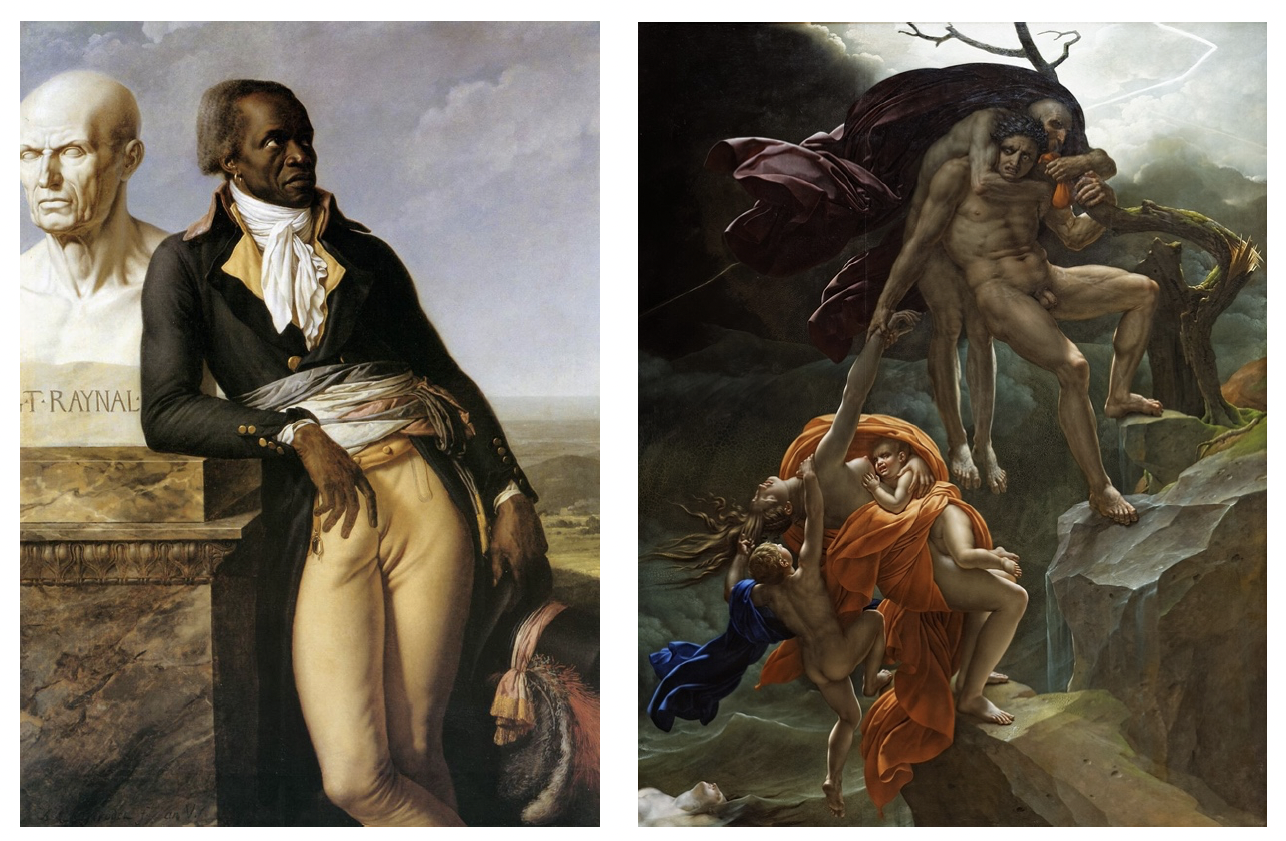
Anne-Louis Girodet-Trioson, Portrait of Citizen Jean-Baptiste Belley (1797) Anne-Louis Girodet-Trioson, Scene from a Deluge (1806)
Girodet’s portrait of Jean Baptiste Belly with the bust of Abbé Raynal then acts as an anchor of memory. Considered a pre-Romantic painter, Girodet would conjure the Baroque in his work “Scene from a Deluge,” a year after Belley’s death. The central figure struggles with horror in his eyes. He hovers over flood waters, using all the strength of his body to hoist his elder on his back while lifting his companion and children to safety from a broken tree limb. The weight of the past and the future is upon him as he hangs on the precipice. Such were the cards on the table for those revolting across plantations in the Antilles and the Americas or traversing underground passages to relative safety in the North. While Girodet would capture the weight of such a feeling, Goya would unravel the psychic space of defiance and martyrdom in the atrocities of war. In Goya’s The Third of May 1808, the central figure kneeling with hands up among the cornered rebels in the glowing yellow light transcends geography. Madrid becomes Saigon, Luanda, Havana, West Bank, Buenos Aires, or Ferguson. As an unconquered artist whose history is defined by rifles aimed at their ancestors and dead comrades at their feet in perpetuity, my relationship with Goya’s The Third of May 1808 is intimate.

The Third of May 1808, Francisco José de Goya y Lucientes (1814)
The why in choosing a subject or subject matter to say more than what’s on the surface within the confines of unfreedom is a familiar terrain for an unconquered artist working within empire. My antagonism to empire is ontological and is a precondition as a steward of memory. I find kinship with Caravaggio’s decision to turn Roman streetwalkers, drunkards and prostitutes into saints, disciples and gods emerging from the dark gullies and hoods of his time. I am in solidarity with the twink hustler turned into Bacchus with a fuck you in his eyes and whose dirty fingernails and offering of rotten fruit give you a hint of his reality. These are decisions that indicate a disloyalty to power. The Vatican may have been employing Baroque artists to produce propaganda for its Counter reformation campaign, but the artists were also attempting to convey the inner life of the person, to deepen and intensify the interpretation of feeling and emotional life. In painters like Caravaggio and Rembrandt and sculptors like Bernini, psychological interpretation and the sense of presence was not solely a religious endeavor even if that was the paid assignment. It is visible in the contrast between the rigidity present in aristocratic portraits versus when the artist was seated before a peer as subject. There is a feeling of being off the clock in the paintings of Diego Velasquez when he is not acting a court painter. A kind of freedom which his slave, the artist Juan de Pareja would not experience for twenty years under his command.
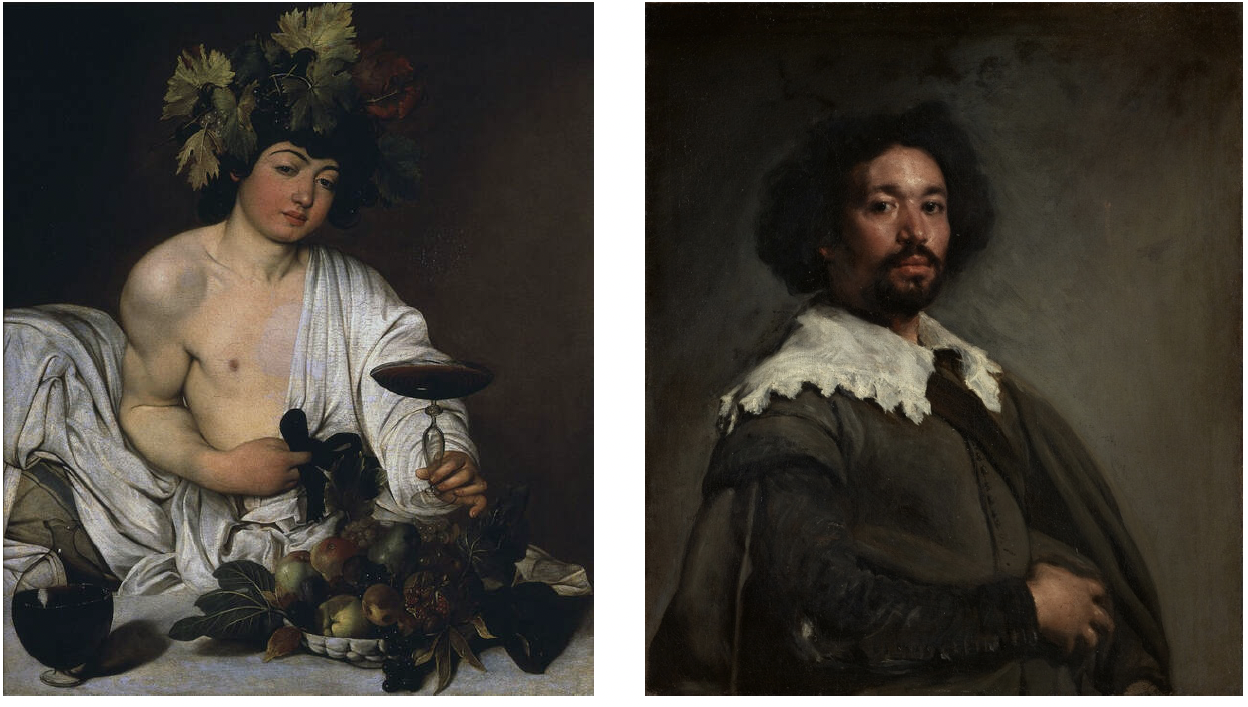
Bacchus, Michelangelo Merisi da Caravaggio (1596) Portrait of Juan de Pareja, Diego Velasquez (1650)
How then does the Baroque appear in the New World, which in the same breath is to ask, how was the power of the Vatican enforced? In The Andes the propaganda of the Catholic Church to convert the indios was in full effect and the influence of older Flemish engravings and medieval imagery brought to educate “the savages” in the newly established churches across South America are felt in Andean Baroque. If the Baroque in Italy was contemplating the psychic and emotive inner space of the human hidden in catholic propaganda, in the colonies the propaganda was a colonial counterinsurgent psy op.
The manual Ritual Formulario written by Franciscan priest Juan Perez Bocanegra provides a window into the ways they sought to meticulously dissect indigenous spirituality from the people. Violent interrogations that criminalized indigenous practices are made visible in questions such as, “In the Capac Raimi, Inca Raimi, and the other festivals of your past, have you performed dances, adoring the huacas, that in the time of the Incas you used to adore?” Bocanegra would however incorporate many spiritual and philosophical concepts from indigenous spirituality in his text and in the images displayed to win over the pueblos de indios who were now colonial subjects of Spain. In Peru, on the ruins of the Inca empire, churches would be built and baroque painting in the Andes would be in the form of murals which also incorporated aspects of indigenous concepts which the church saw as a pathway to conversion. Syncretism played a significant role in reeducation and assimilation. But syncretism is a double-edged sword that cuts both ways. In the case of “Death in the House of the Rich and poor” by artist Tadeo Escalante, there is hidden condemnation of the colonial masters and their lackeys as well as an acknowledgement of the slain rebel leader Tupac Amaru. For syncretism to be a useful tool against subjugation, the subjugated are required to remember the ongoing historical assignment to get free as an obligation handed to us by our ancestors. When this task is abandoned, syncretism collapses, and the babalawo becomes an evangelical preacher. The rebel training in capoeira becomes cultural performance.

Death in the House of the Rich and Poor, Tadeo Escalante, Church of San Juan Bautista de Hauro (1802)
There is much more to say regarding the relationship to the Western art historical canon and conquest. How do we think through Van Gogh, Manet and Cezanne who are painting during the cannibalism of the Berlin Conference? What are we to make of Clement Greenberg’s insistence on formalism in his 1955 essay “American Type painting” in the same year as the Bandung conference? Questions produce more questions. As an artist, my ongoing engagement is with the emotive and psychic conditions of unfreedom. In what ways does power reproduce indifference, exhaustion and melancholia, creating perceptions of powerlessness at the service of subjugation? In this way my work aligns with the baroque to investigate the ever-present despair, what might be defined as a spiritual apathy. These are political questions as much as they are aesthetic.
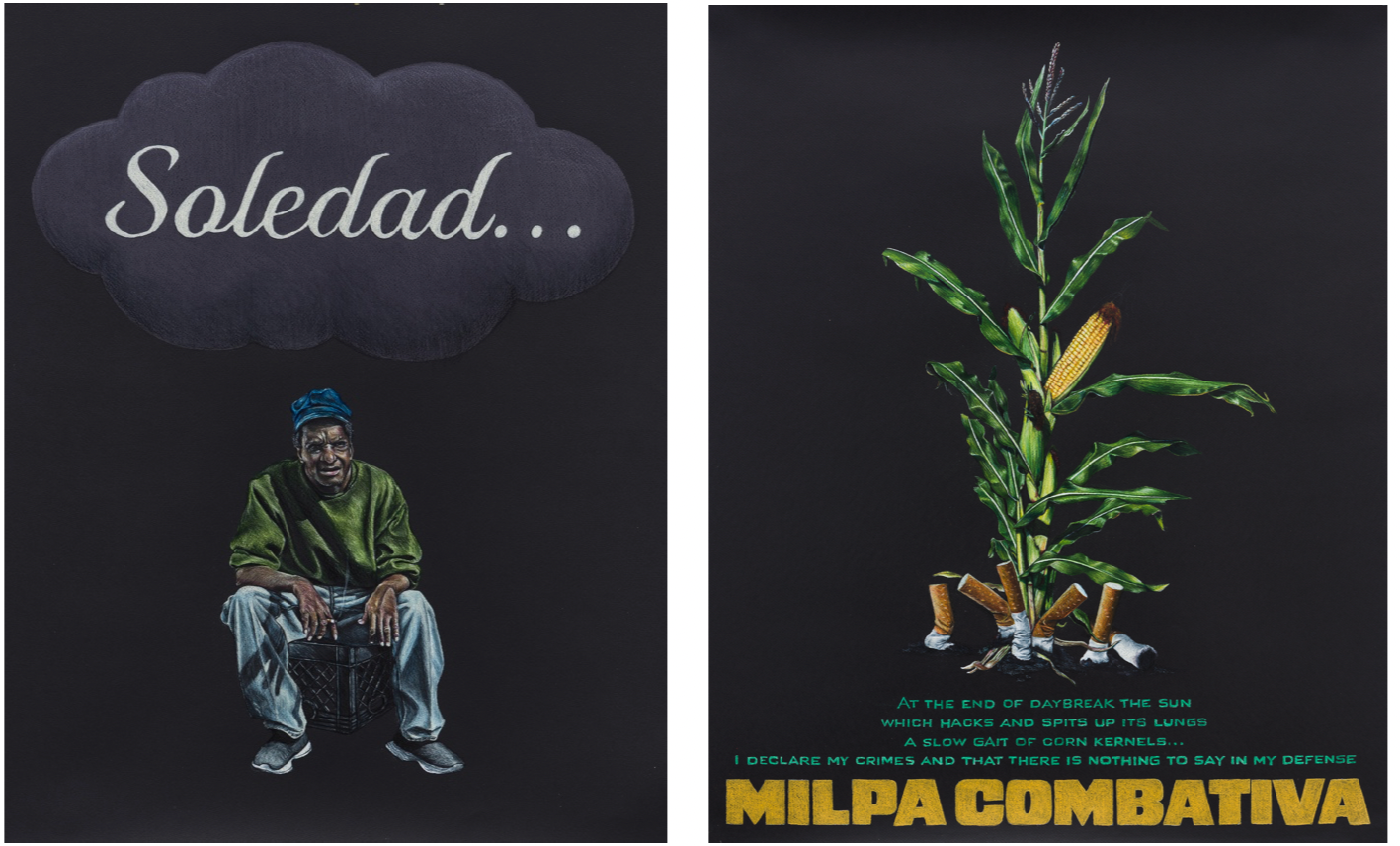
Soledad, After George Jackson, Shellyne Rodriguez (2024). Milpa Combativa, Shellyne Rodriguez (2024)
And so I linger here. A Baroque from below which I call Quebrao, a haunting shadow as anagram which translates to “broken” in Spanish in a spelling that removes the intervocalic consonant and rebukes the colonizer’s tongue. Like Santeria hid its Orishas within the Catholic pantheon, it must camouflage itself. And when it fights, its guerrilla warfare or its the Capoeira hidden in the dance. This practice extends into the traditions of Hip Hop culture, born of the poor Black & Puerto Rican kids of the South Bronx who sampled and remixed and seized the ruins to create a new culture which i have inherited. My practice is an anticolonial act, a gesture, a construction, and a narrative pulling from a variety of sources to sample and remix and reinvent. A pop, a lock, a BREAK. Broken. Quebrao. The work seeks to create an emotive psychological space to draw the viewer into a moment where they encounter the trappings of chicanery and witness the collapse or the triumph of these devices as they are put in friction with a stealth and insurgent will to live and to thrive. The ongoing inquiry in the work is how we sway, collide, confront, evade, weep, break, mend, weave and push forward. How we sample and remix. Here is a record, mostly through drawing, printmaking, collage, sculpture, and assemblage. And what does that look like? On paper? In an object? As a narrative? As an action? To steward, to think and to make. This is how an artist statement becomes an art historical essay.
As we collectively bear witness to the fall of the Western imperial project established in 1492, such a survey feels necessary.
Barroco, Quebrao: El artista inconquistable de la periferia dentro del imperio
Mi práctica como artista se sitúa en los contextos de la historia. Un pasado que no es un pasado y que sigue configurando los contornos del presente. Hablar del qué y del porqué de mi práctica requiere una ubicación y un contexto. Esa ubicación se encuentra dentro del imperio de los Estados Unidos, en los márgenes de su capital financiera, la ciudad de Nueva York. El Bronx, al igual que muchos otros enclaves dentro de EE. UU., constituye lo que Malcolm X, Stokely Carmichael y Huey P. Newton denominaron «colonias domésticas», «internas» y «dispersas». Estas colonias internas, situadas en tierras indígenas no cedidas, están pobladas por descendientes negros de la esclavitud de EE. UU., así como por pueblos procedentes del Caribe, Latinoamérica, África y Asia.
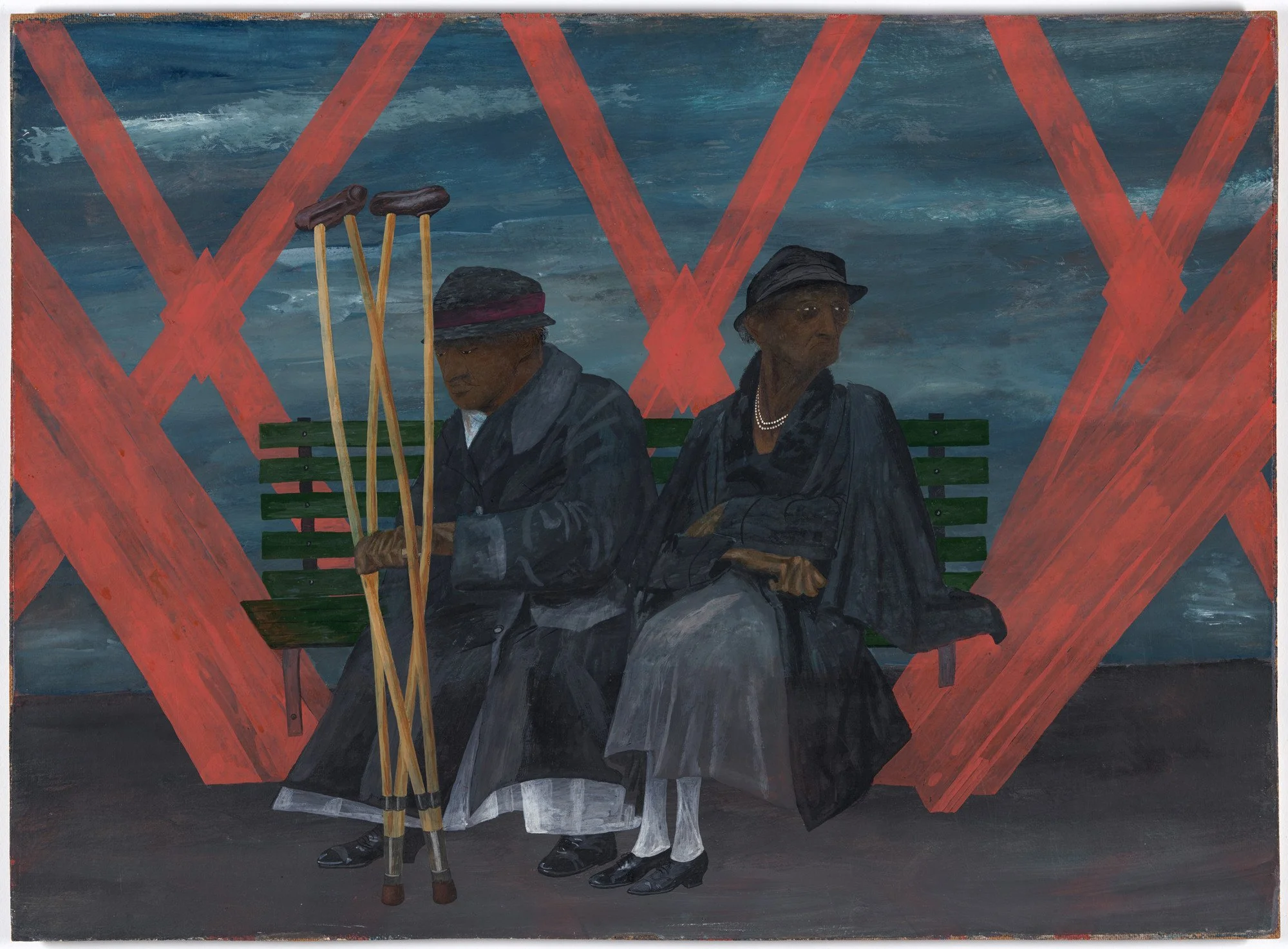
El puente de Willis Avenue, Ben Shahn (1940)
Mi subjetividad histórica como descendiente de africanos esclavizados a través del Caribe me ha traído hasta aquí. Soy quien soy y estoy donde estoy como resultado de numerosas consecuencias que se han ido desarrollando o, por decirlo en términos marxistas, debido a la evolución dialéctica de las fuerzas productivas. Los conocimientos indígenas y las tradiciones espirituales africanas, basadas en el culto a los antepasados, reiterarían este punto al afirmar que nunca somos solo nosotros mismos. Somos el desarrollo de muchas vidas vividas que nos han impulsado hacia este mismo momento. Somos la culminación de muchos abuelos y de sus abuelos, y así sucesivamente. El desarrollo de una semilla original que sigue floreciendo y dando fruto. El arte no puede desconectarse de la cadena de consecuencias que ha conducido al presente. Esto es tan cierto para los descendientes de los Médicis o del Mayflower como lo es para los descendientes de los negros esclavizados del sur de Estados Unidos antes de la Guerra Civil o de los cimarrones de las estribaciones de Palenque, en el norte de Colombia. ¿Cómo, entonces, posiciona el artista —cuya vida ha sido moldeada por la conquista imperial, el surgimiento del capitalismo, la esclavitud, el colonialismo y el genocidio— su práctica artística en relación con el canon occidental con el que mantiene una relación conflictiva?
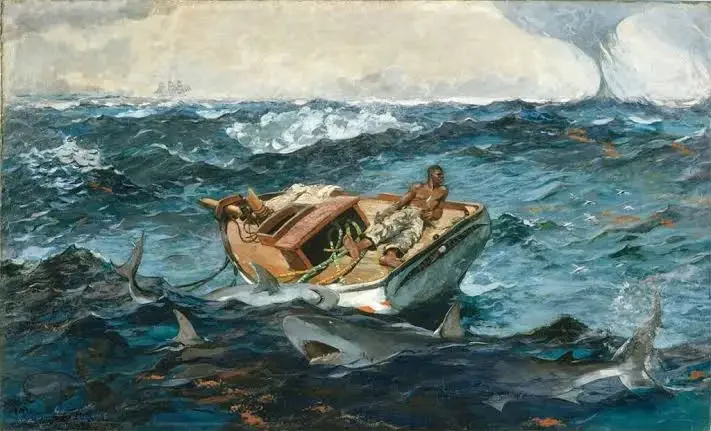
La corriente del Golfo, Winslow Homer, (1899)
No hay duda de que, para quienes vivimos en el dique Nuevo Mundo, la imposición de Occidente nos ha moldeado. Esto es lo que heredamos de la atrocidad de la dominación colonial e imperial que reordenó nuestro mundo, convirtiéndonos en jardines y minas para una Europa acumuladora. Pero, aunque históricamente nos ha moldeado la subyugación, no todos hemos sido conquistados. Los inconquistados entre nosotros siempre hemos socavado, subvertido, pirateado, remezclado y nos hemos rebelado contra estas imposiciones. Hemos sido un submundo. Un bastión guerrillero oculto. Un juicio inminente. De este modo, mi práctica es una estrategia de supervivencia contra el borrado y la subyugación. Mi práctica reconoce la falta de libertad que ha heredado y rechaza la asimilación al imperio. Actúa como una sombra fantasmal sobre el canon occidental. Un orisha oculto dentro del santo católico. Es una práctica que entiende que el poder del arte trasciende lo estético y reside también en cómo conserva lo que debe recordarse más allá del cuadro dorado.
Como artista inconquistable formado en el crisol de la conquista colonial del Nuevo Mundo, veo en el canon artístico de Europa Occidental la historia de la subyugación y la resistencia. Contemplar los momentos ilustres de la historia del arte y situarme en su contexto es encontrarme bajo el filo de una espada, encadenada en un barco, en una plantación de azúcar o en las profundidades de una mina de plata. Veo la colonización española de Borikén (Puerto Rico) en la finalización de la Capilla Sixtina por parte de Miguel Ángel ese mismo año. Contemplar La Gioconda de Da Vinci es saber que su genio presagiaba las atrocidades cometidas por Hernán Cortés, quien, con su saqueo de las tierras que hoy llamamos México, introdujo en Europa el tinte rojo saturado elaborado a partir de la cochinilla, un insecto recolectado de los cactus locales.
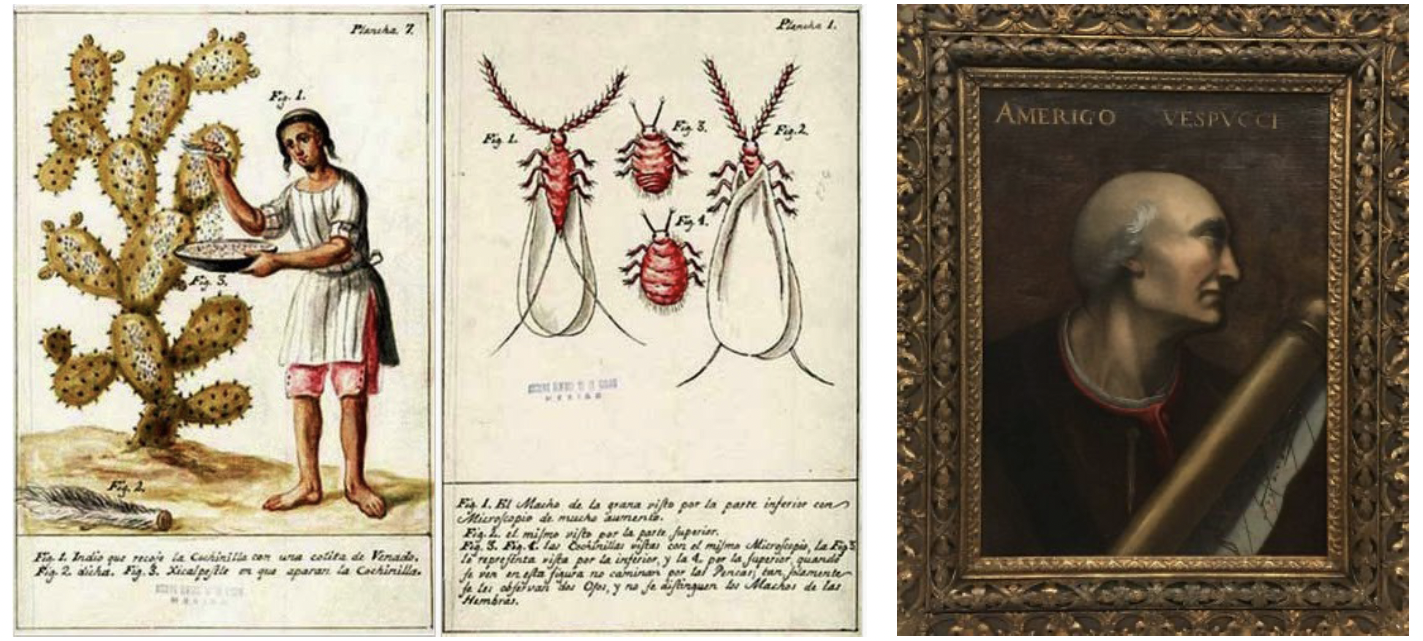
Tratado sobre la cochinilla, de José Antonio de Alzate y Ramírez, 1777 Américo Vespucio, basado en un dibujo al carboncillo de Da Vinci
Los nahuas que no murieron a causa de las enfermedades ni fueron masacrados durante la conquista fueron explotados hasta la muerte para producir el vibrante pigmento rojo que se encuentra en pinturas como «La incredulidad de San Tomás» (1601), de Caravaggio, y «La novia judía» (1665-1669), de Rembrandt. Entre los numerosos sujetos de Da Vinci se encontraba Américo Vespucio, cuyos mapas del llamado «Nuevo Mundo» darían lugar a que Abya Yala y la Isla de la Tortuga pasaran a llamarse América.
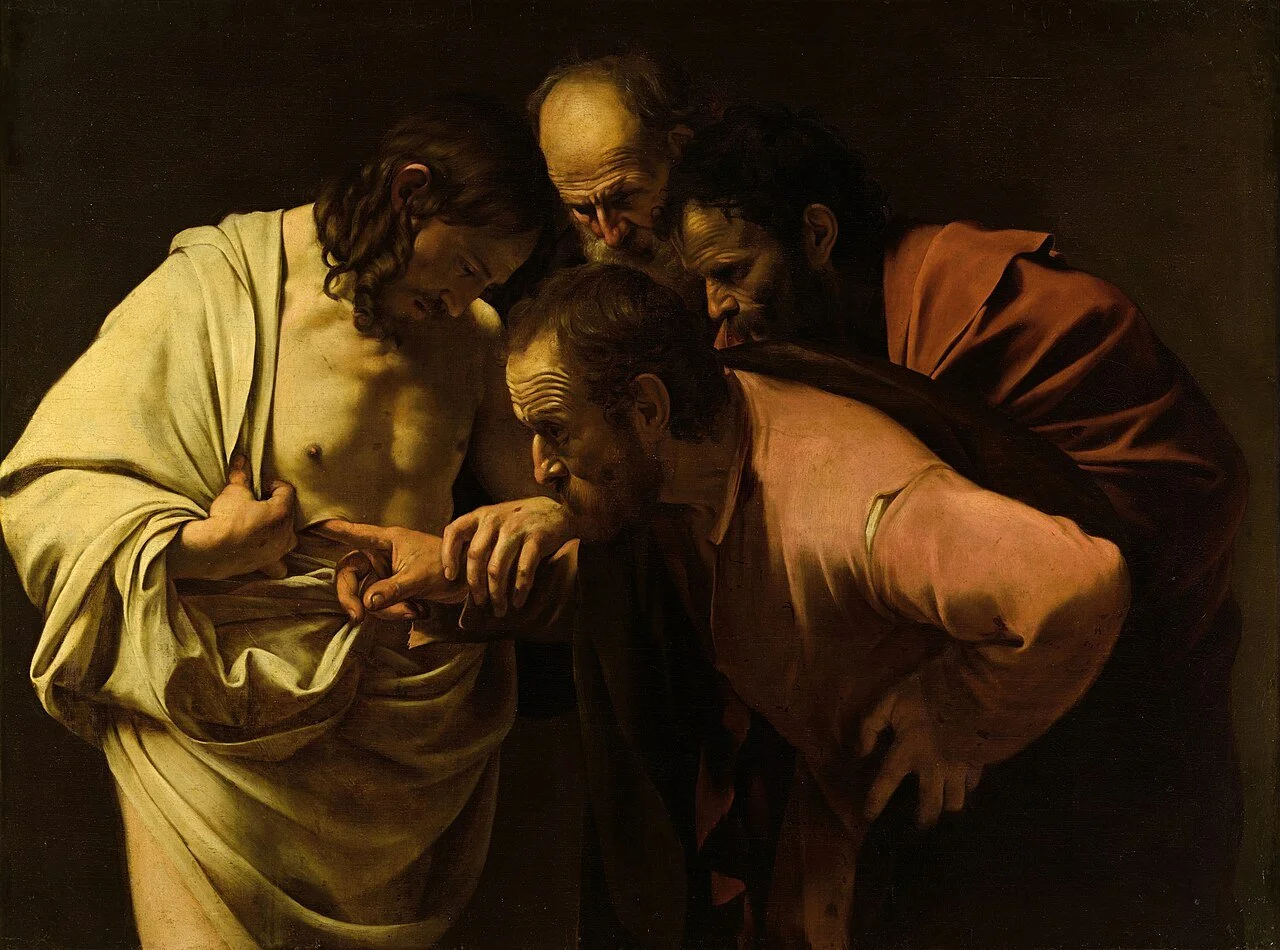
La incredulidad de Santo Tomás, Miguel Ángel Merisi da Caravaggio (1602)
Mi práctica establece un vínculo con el canon occidental a través de aquellos artistas cuyo enfoque creativo «revela su forma de ver el mundo y su relación con él en su época», tal y como describe el historiador John Berger. Se trata de una investigación que va más allá del dominio de la técnica y la forma. Pieter Brueghel el Viejo me muestra la vida rural Flamenca en una época en la que el antiguo orden europeo estaba siendo sustituido por una economía mundial impulsada por la expansión y la penetración en el Nuevo Mundo. En su obra veo la vida antes de la pauperización de los campesinos europeos, expulsados de sus tierras por los cerramientos y la creación de vagabundos errantes, convertidos en prescindibles y obligados a vender su mano de obra bajo el nuevo orden capitalista. Veo a las esposas campesinas abandonadas, acusadas de brujería, a quienes se les confiscaban sistemáticamente sus propiedades. A aquellas que no fueron torturadas y quemadas como brujas y que se dedicaron al trabajo sexual para sobrevivir en los puertos de Ámsterdam, atendiendo a los marineros de la Compañía Neerlandesa de las Indias Orientales y Occidentales; veo a sus maridos contratados, trabajadores campesinos convertidos en marineros a sueldo, perdidos en el mar o asesinados en el Caribe por los arahuacos en rebelión. Me pregunto cuántos de esos hombres se encontrarían entre los marineros que escaparon de sus capitanes abusivos y se unieron a la clase marinera, que se mezclaba con esclavos y cimarrones, participando en la economía clandestina, vendiendo contrabando y difundiendo noticias de la revolución haitiana por todas las Antillas.
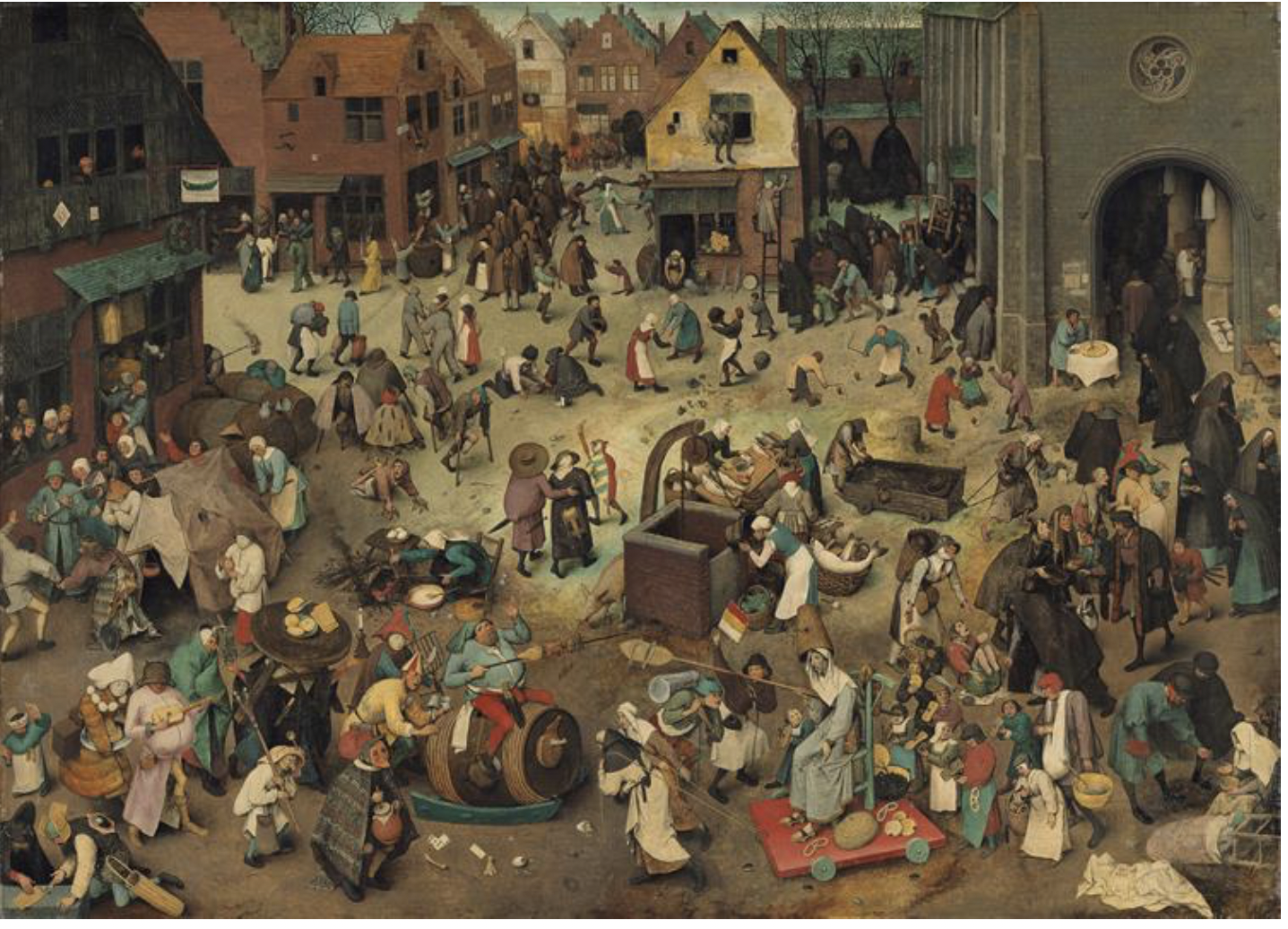
La lucha entre el Carnaval y la Semana Santa, de Pieter Bruegel el Viejo (1559)
La ruptura sísmica que fue la Revolución Haitiana y sus consecuencias, que aún se siguen sintiendo, continúan moldeando nuestro mundo actual, ya que el Occidente no ha cesado en su castigo colectivo al pueblo haitiano por haber liderado una rebelión de esclavos y fundado un Estado gobernado por antiguos cautivos. La Revolución Haitiana desencadenó una onda expansiva de resistencia por todas las Américas, al tiempo que tuvo un impacto económico significativo en sus esclavistas franceses, incitados por las acciones del Tercer Estado de la Revolución Francesa, que decapitó al rey.
Cuando contemplo «La libertad guiando al pueblo», de Delacroix, busco su relación con Haití y la encuentro en su precursor, Anne-Louis Girodet de Roussy-Trioson, quien pintó el retrato de Jean Baptiste Belley, el primer diputado negro de Saint-Domingue en la Convención Nacional Francesa de París, figura clave en la aprobación del decreto para abolir la esclavitud. En 1802, cuando Napoleón Bonaparte restableció la esclavitud, los oficiales negros fueron expulsados del ejército. Ocho años después de su participación en la aprobación del decreto en la Convención Nacional, Belley, un oficial de alto rango, era considerado ahora una amenaza. Fue detenido a su regreso a Saint-Domingue por las fuerzas napoleónicas y permaneció prisionero durante tres años antes de su muerte en 1805.
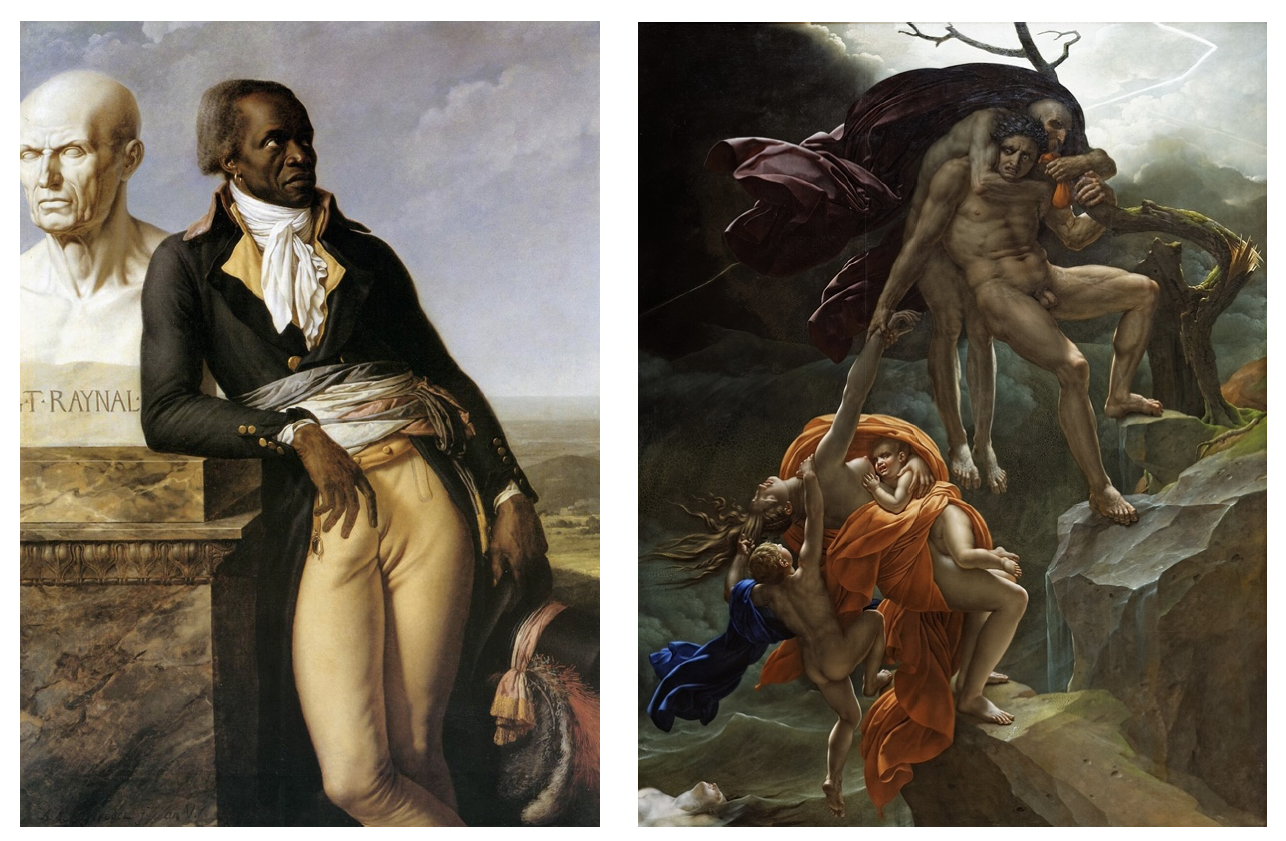
Anne-Louis Girodet-Trioson, Retrato del ciudadano Jean-Baptiste Belley (1797) Anne-Louis Girodet-Trioson, Escena del Diluvio (1806)
El retrato de Jean Baptiste Belly con el busto del Abbé Raynal, obra de Girodet, actúa entonces como un punto de referencia para la memoria. Considerado un pintor preromántico, Girodet evocaría el barroco en su obra «Escena de un diluvio», un año después de la muerte de Belly. La figura central lucha con el horror reflejado en sus ojos. Se mantiene a flote sobre las aguas del diluvio, empleando toda la fuerza de su cuerpo para cargar a su anciano a la espalda, al tiempo que intenta rescatar a su compañera y a sus hijos de una rama rota. El peso del pasado y del futuro está sobre él mientras se aferra al precipicio. Tal era la situación a la que se enfrentaban quienes se rebelaban en las plantaciones de las Antillas o quienes atravesaban pasadizos subterráneos en busca de una relativa seguridad en norte America. Mientras que Girodet captaba el peso de ese sentimiento, Goya desvelaba el espacio psíquico de la rebeldía y el martirio en las atrocidades de la guerra. En «El 3 de mayo de 1808» de Goya, la figura central, arrodillada con las manos en alto entre los rebeldes acorralados bajo una luz amarilla resplandeciente, trasciende la geografía. Madrid se convierte en Saigón, Luanda, La Habana, Cisjordania, Buenos Aires o Ferguson. Como artista inconquistable cuya historia está marcada por los fusiles apuntando a sus antepasados y los compañeros caídos a sus pies de forma perpetua, mi relación con «El 3 de mayo de 1808» de Goya es íntima.
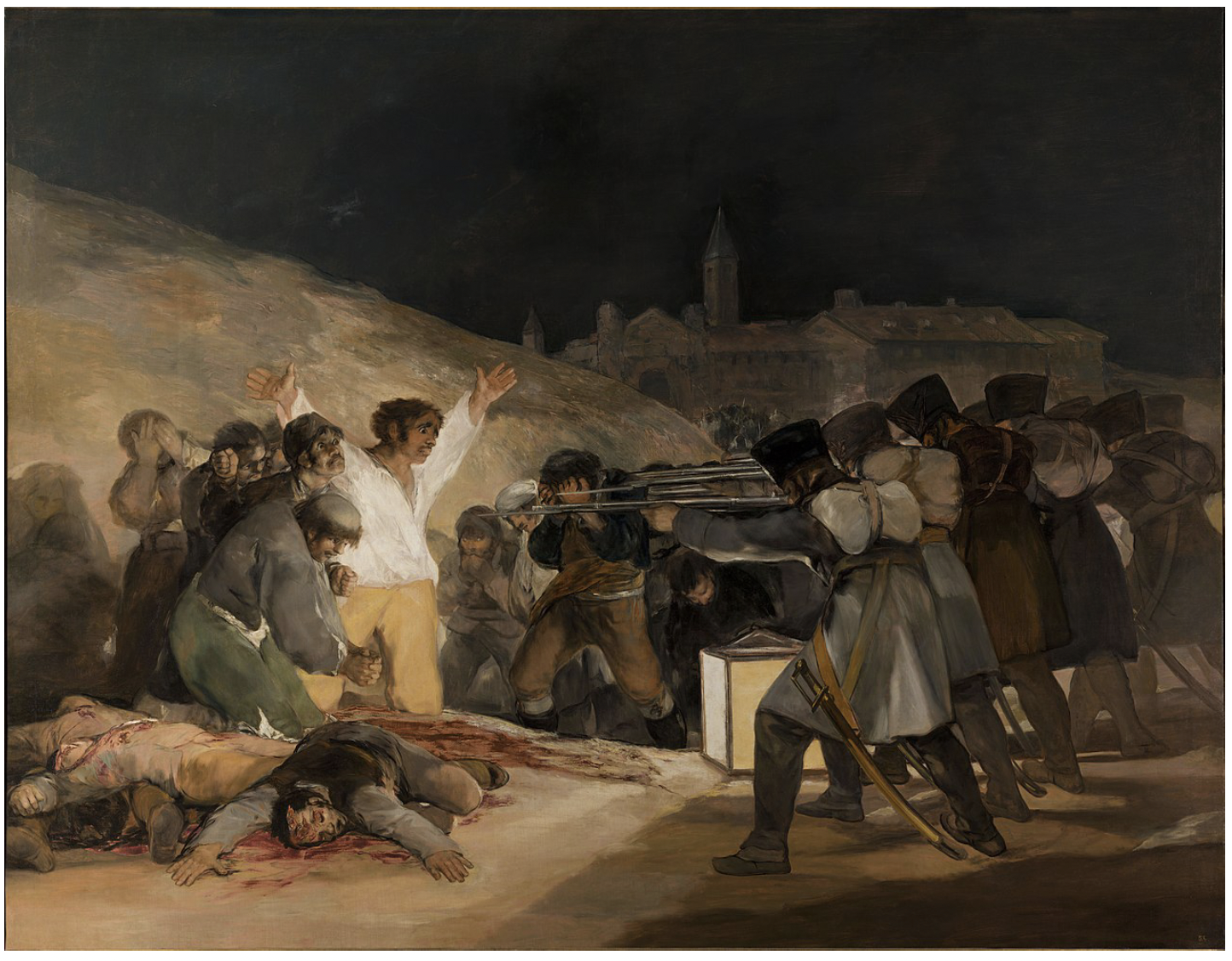
El 3 de mayo de 1808, Francisco José de Goya y Lucientes (1814)
El «porqué» a la hora de elegir un tema o un tema para expresar algo más allá de lo superficial, dentro de los límites de la falta de libertad, es un terreno familiar para un artista inconquistado que trabaja en el interior del imperio. Mi antagonismo hacia el imperio es ontológico y constituye una condición previa como guardián de la memoria. Me siento identificado con la decisión de Caravaggio de convertir a las prostitutas callejeras, los borrachos y las mujeres de la noche de Roma en santos, discípulos y dioses que emergen de los oscuros callejones y barrios marginales de su época. Me solidarizo con el joven prostituto que se convirtió en Baco, con un «que te jodan» en la mirada, y sus uñas sucias y su ofrenda de fruta podrida te dan una pista de su realidad. Son decisiones que denotan una deslealtad hacia el poder. Puede que el Vaticano contratara a artistas barrocos para producir propaganda para su campaña de la Contrarreforma, pero los artistas también intentaban transmitir la vida interior de la persona, profundizar e intensificar la interpretación de los sentimientos y la vida emocional. En pintores como Caravaggio y Rembrandt y escultores como Bernini, la interpretación psicológica y la sensación de presencia no eran únicamente un empeño religioso, aunque ese fuera el encargo por el que se les pagaba. Esto se aprecia en el contraste entre la rigidez presente en los retratos aristocráticos y el momento en que el artista se sentaba ante un igual como modelo. En los cuadros de Diego Velázquez se percibe una sensación de estar fuera del horario laboral cuando no actúa como pintor de la corte. Una especie de libertad que su esclavo, el artista Juan de Pareja, no experimentaría durante veinte años bajo su mando.
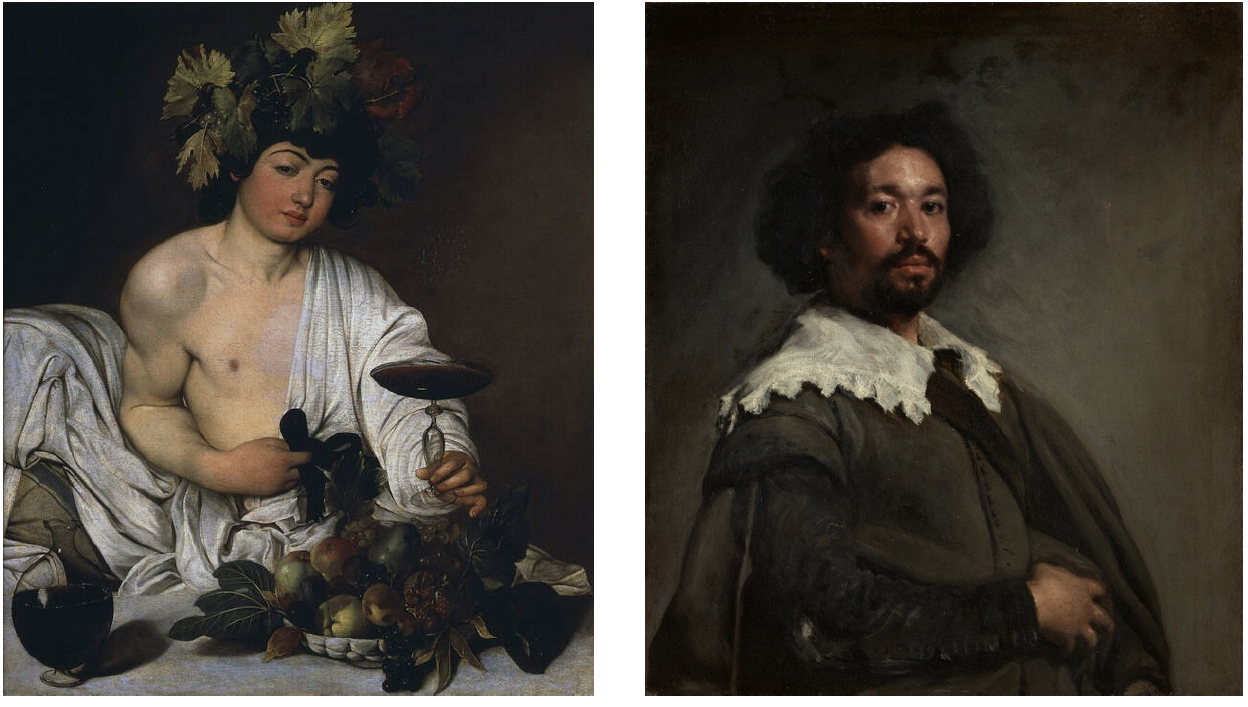
Baco, Miguel Ángel Merisi da Caravaggio (1596) Retrato de Juan de Pareja, Diego Velázquez (1650)
¿Cómo se manifiesta, pues, el barroco en el Nuevo Mundo?, lo que equivale a preguntarse: ¿cómo se imponía el poder del Vaticano? En los Andes, la propaganda de la Iglesia católica para convertir a los indios estaba en pleno desarrollo y la influencia de antiguos grabados flamencos y de la imaginería medieval, traídos para «educar a los salvajes» en las iglesias recién establecidas por toda Sudamérica, se percibe en el barroco andino. Si el barroco en Italia contemplaba el espacio interior psíquico y emotivo del ser humano oculto tras la propaganda católica, en las colonias la propaganda era una operación psicológica colonial de contrainsurgencia.
El manual Ritual Formulario, escrito por el sacerdote franciscano Juan Pérez Bocanegra, ofrece una visión de las formas en que trataban de diseccionar meticulosamente la espiritualidad indígena del pueblo. Los interrogatorios violentos que criminalizaban las prácticas indígenas quedan patentes en preguntas como: «En el Capac Raimi, el Inca Raimi y las otras fiestas de su pasado, ¿han realizado danzas, adorando a las huacas, que en la época de los incas solían adorar??». Sin embargo, Bocanegra incorporaría muchos conceptos espirituales y filosóficos de la espiritualidad indígena en su texto y en las imágenes mostradas para ganarse a los pueblos de indios, que ahora eran sujetos coloniales de España. En Perú, sobre las ruinas del Imperio inca, se construirían iglesias y la pintura barroca en los Andes adoptaría la forma de murales que también incorporaban aspectos de conceptos indígenas que la Iglesia consideraba una vía hacia la conversión.El sincretismo desempeñó un papel significativo en la reeducación y la asimilación. Pero el sincretismo es un arma de doble filo que corta en dos sentidos. En el caso de «La muerte en la casa de los ricos y los pobres», del artista Tadeo Escalante, hay una condena velada de los amos coloniales y sus lacayos, así como un reconocimiento al líder rebelde asesinado Túpac Amaru. Para que el sincretismo sea una herramienta útil contra la subyugación, los subyugados deben recordar la misión histórica en curso de liberarse como una obligación que nos han legado nuestros antepasados. Cuando se abandona esta tarea, el sincretismo se derrumba y el babalawo se convierte en un predicador evangélico. El entrenamiento rebelde en capoeira se transforma en solo una representación cultural.

La muerte en la casa de los ricos y los pobres, Tadeo Escalante, Iglesia de San Juan Bautista de Hauro (1802)
Hay mucho más que decir sobre la relación con el canon histórico-artístico occidental y la conquista. ¿Cómo reflexionamos sobre Van Gogh, Manet y Cézanne, que pintaban durante el canibalismo de la Conferencia de Berlín? ¿Qué debemos pensar de la insistencia de Clement Greenberg en el formalismo en su ensayo de 1955 «American Type Painting», publicado el mismo año que la Conferencia de Bandung? Las preguntas generan más preguntas. Como artista, mi compromiso constante gira en torno a las condiciones emotivas y psíquicas de la falta de libertad. ¿De qué manera el poder reproduce la indiferencia, el agotamiento y la melancolía, creando percepciones de impotencia al servicio de la subyugación? En este sentido, mi obra se alinea con el barroco para investigar la desesperación siempre presente, lo que podría definirse como una apatía espiritual. Se trata de cuestiones tan políticas como estéticas.
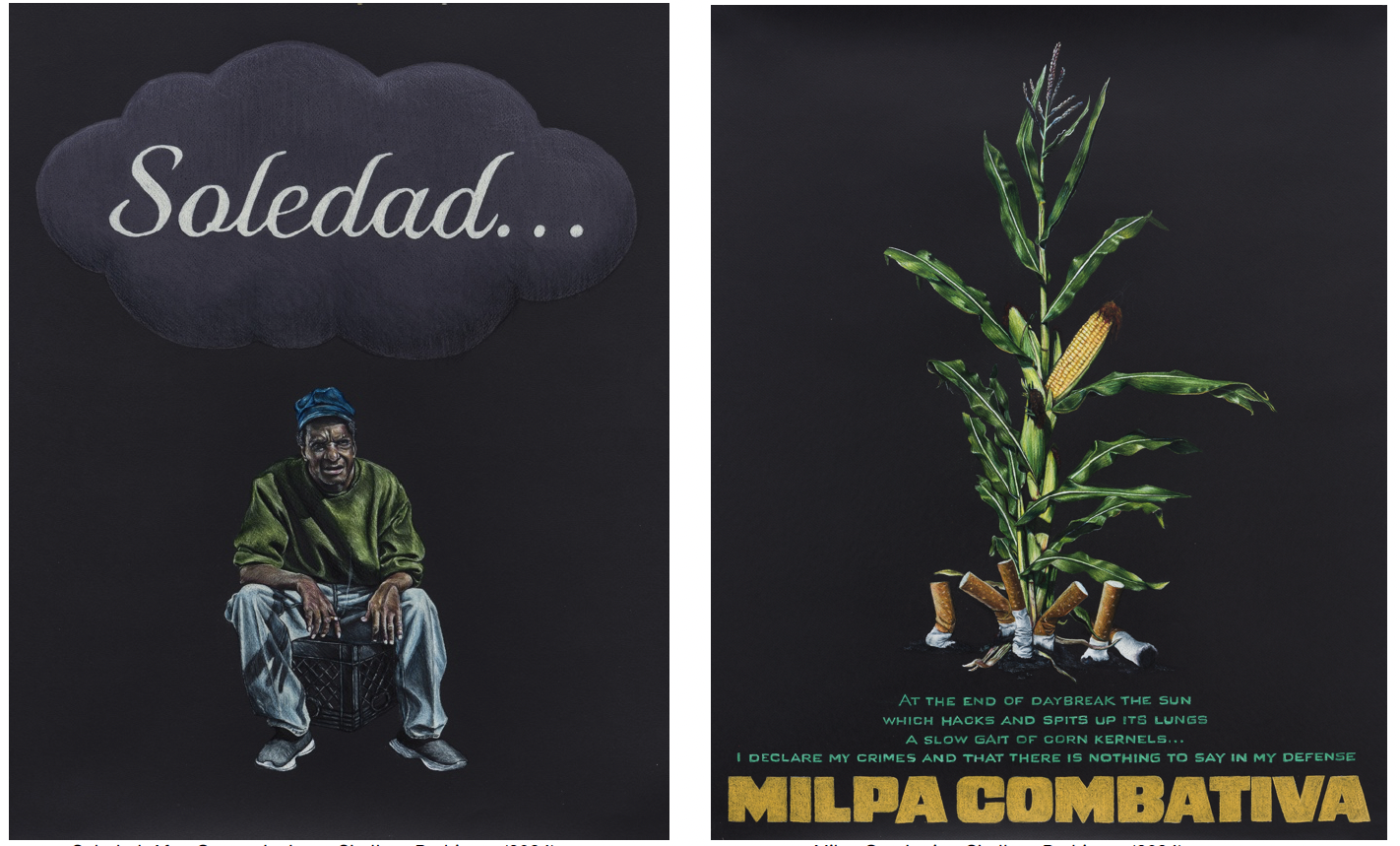
Soledad, After George Jackson, Shellyne Rodriguez (2024). Milpa Combativa, Shellyne Rodriguez (2024)
Me quedo aquí. Un barroco desde abajo al que llamo Quebrao, una sombra inquietante que, como anagrama, se traduce como «roto» en español, con una ortografía que elimina la consonante intervocálica y reprende la lengua del colonizador. Al igual que la santería ocultó a sus orishas dentro del panteón católico, debe camuflarse. Y cuando lucha, lo hace mediante la guerra de guerrillas o la capoeira oculta en la danza.
Esta práctica se extiende a las tradiciones de la cultura del hip-hop, nacida de los niños pobres afroamericanos y puertorriqueños del sur del Bronx que samplearon, remezclaron y se apoderaron de las ruinas para crear una nueva cultura de la que yo he heredado. Mi práctica es un acto anticolonial, un gesto, una construcción y una narrativa que se nutre de una variedad de fuentes para samplear, remezclar y reinventar. Un pop, un lock, un BREAK. Roto. Quebrao.
La obra busca crear un espacio psicológico emotivo para atraer al espectador hacia un momento en el que se encuentre con las trampas de la artimaña y sea testigo del colapso o del triunfo de estos mecanismos al entrar en fricción con una voluntad sigilosa e insurgente de vivir y prosperar. La indagación constante en la obra es cómo nos balanceamos, chocamos, nos enfrentamos, evadimos, lloramos, rompemos, reparamos, entretejemos y seguimos adelante. Cómo tomamos muestras y remezclamos. He aquí un registro, principalmente a través del dibujo, el grabado, el collage, la escultura y el ensamblaje. ¿Y cómo se ve eso? ¿En papel? ¿En un objeto? ¿Como una narrativa? ¿Como una acción? Para custodiar, pensar y crear. Así es como una declaración de la artista se convierte en un ensayo de historia del arte.
Mientras somos testigos colectivos de la caída del proyecto imperial occidental establecido en 1492, este análisis resulta necesario.